
Can Physical Therapy Help After a Traumatic Brain Injury?
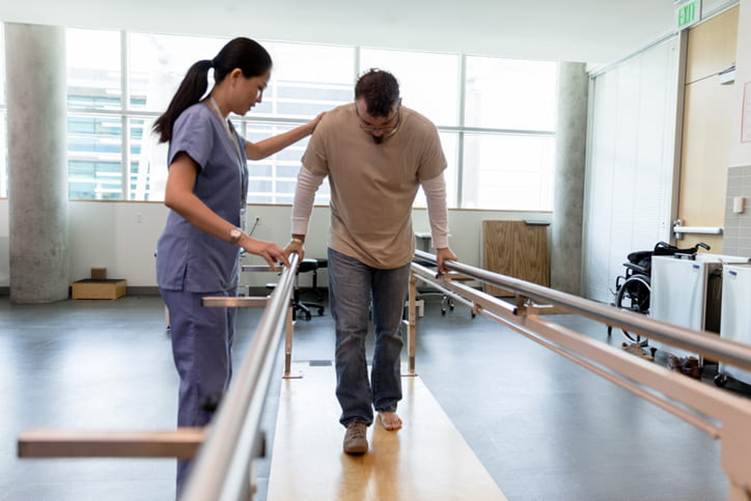
An estimated 64 to 74 million people experience some form of traumatic brain injury (TBI) in the United States every year. If you or a loved one has experienced a TBI, you’re likely wondering whether physical therapy for a brain injury could help with the recovery process. Keep reading to learn more.
Contact us today.
What Is a Traumatic Brain Injury (TBI)?
According to the National Institute of Neurological Disorders and Stroke (NIH), a traumatic brain injury is when a person experiences a traumatic blow to the head that causes damage to the brain. TBIs range in severity and can cause a wide range of symptoms.
Additionally, there are multiple types of TBIs:
- Primary TBI: When the damage is immediate.
- Secondary TBI: When damage is done later as a direct result of the initial head trauma. This type of TBI can happen anywhere from hours to weeks after the initial injury.
- Penetrating TBI: When something penetrates the skull to cause the TBI.
- Non-penetrating TBI: When outside force causes the brain to become damaged inside the skull.
What Are the Symptoms of a TBI?
The symptoms of a TBI vary significantly, depending on the extent of the damage and the location. Symptoms can range from mild to severe, and can be life-threatening.
You should always seek medical attention after a TBI. Especially if you’re experiencing any of the following symptoms within the first 24 hours of the injury.
Physical Symptoms
- Headache
- Changes to your vision (blurred/double vision)
- Pupil size or pupil dilation that is uneven
- Convulsions
- Balance issues
- Weakness in the limbs
- Slurring your speech
- Clear fluid coming out of your nose or ears
Cognitive or Behavior Symptoms
- Loss of consciousness
- Reduced consciousness (such as abnormal trouble waking up)
- Confusion
- Disorientation
- Memory issues
- Issues with problem solving
- Unable to make decisions
- Abnormal changes to sleep patterns
- Unusually cranky and easily agitated
Symptoms Involving Personal Perception
- Changes to hearing (such as ringing in the ears)
- Feeling dizzy, lightheaded, or off balance
- Vertigo
- A bad taste in your mouth without cause
- Light or sound sensitivity
- Abnormal mood changes
- Anxiety
- Feeling depressed
- Drowsiness
- Lacking motivation
How Can Physical Therapy Assist With Recovery After a TBI?
According to the Brain Injury Association of America, traumatic brain injuries often result in various degrees of impairment to a patient’s physical function.
In many cases, the most effective way to regain the physical function is through physical therapy for a brain injury.
Physical therapists work with patients to create personalized treatment plans to help them retrain their bodies to perform the daily activities they’re struggling with.
Which Symptoms Can Physical Therapy Improve?
Physical therapy works by helping your brain create new neural connections to bypass the damaged area and regain the ability to do physical activities (this process is known as neuroplasticity).
Physical therapy has the potential to improve the following symptoms:
- Mobility issues
- Loss of muscle control
- Issues with balance
- Issues with coordination
- Abnormal gait
- Inability to move your body the way you normally would
- Weakness
- Pain management
What Kinds of Treatments Are Used in Physical Therapy?
Retraining the body using the concept of neuroplasticity requires repetitive practice of specialized movements and exercises. Physical therapy is used to help patients be able to perform everyday tasks independently, such as walking, gripping, reaching, etc.
Physical therapists trained in traumatic brain injuries will evaluate the issue(s) that your injury caused and then design a personalized treatment plan that may incorporate a mix of the following types of physical therapy:
- Targeted stretching
- Strength training specific to your injury
- Massage therapy
- Hydrotherapy (therapy submerged in water)
- Cold therapy
- Heat therapy
- Transcutaneous electrical nerve stimulation (TENS) device
When Should Patients Start Physical Therapy After a Brain Injury?
Starting physical therapy depends on the extent of the injury and other medical factors. However, in most cases, it is recommended to start as soon as possible, as studies suggest it leads to better outcomes.
How Long Will Recovery With Physical Therapy Take?
How long traumatic brain injury physical therapy takes depends on the extent of the injury and the symptoms it causes. Some patients may only require physical therapy for a few weeks, and some can still require treatment after months or even years.
Depending on the extent of your injuries, your doctor may also prescribe medications for symptom management and/or recommend other forms of rehabilitation for your recovery.
How Can ZK Physical Therapy & Chiropractic Support Traumatic Brain Injury Recovery?
ZK Physical Therapy & Chiropractic offers several treatments and services that can assist patients recovering from a TBI, such as:
- A complimentary consultation.
- Personalized physical therapy for your brain injury.
- X-rays before and after treatment.
- Attorney referrals for TBI injuries that are still in court.
- Pain management techniques.
At ZK Physical Therapy & Chiropractic, our patient’s recovery and improving their quality of life in a supportive environment is our top priority. Whether you require car accident physical therapy, physical therapy to restore your balance after a concussion, or are experiencing symptoms from a past TBI; the staff at ZK Physical Therapy & Chiropractic can help.
Traumatic brain injuries can range from mild concussions to serious life-threatening emergencies. Receiving traumatic brain injury physical therapy during your recovery can help you manage pain, heal faster, and gives you the best chance of a full recovery.